🕯️Virtual Candles
1 lit🕯️
Sign in to light a candleBiography
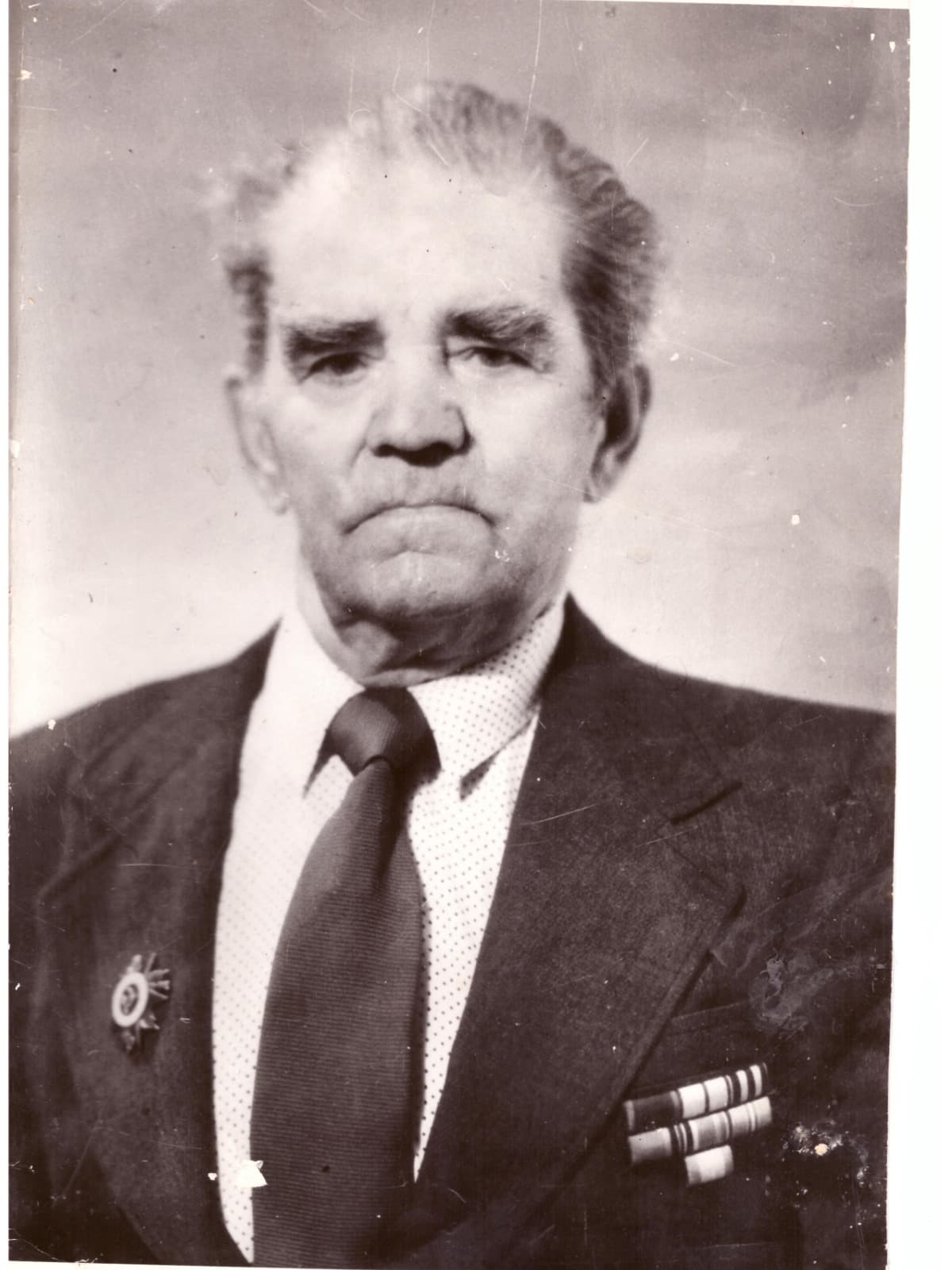
Petr Kharitonovich Titov was born in 1907 in the Gomel Region, Belarus. After finishing secondary school he worked as an electrician in a mine in the Donbass. From the Donbass he was conscripted into the Red Army and sent to study at a Signals School, after which he served in Baku and then in the Kiev Special Military District, in the city of Ovruch. In 1937, the commander of the Kiev Military District, I. E. Yakir, was arrested and shot under the fabricated "Military Case" (Tukhachevsky Affair). Soon after, on a false denunciation, P. Kh. Titov, who was serving at the Kiev Military District headquarters, was expelled from the Communist Party and dismissed from the Red Army. After his dismissal, he worked as an electrician in factories in Dnepropetrovsk and Gomel. In 1939, after the annexation of Western Belarus to the USSR, he was appointed headmaster of a school in the village of Slobodka, Stolbtsy District, Baranovichi Region, where the Great Patriotic War caught him and his family.
If you look at a map of Belarus and find the place where the Neman River crosses the Berlin–Warsaw–Baranovichi–Minsk–Moscow road, that is the town of Stolbtsy. The village of Slobodka is about 12 kilometres downstream from Stolbtsy along the Neman. The main road along which the Germans advanced on Moscow passed through Stolbtsy, so in the very first hours of the war the Germans bombed Stolbtsy, leaving the bridges over the Neman, the railway station and several large buildings for their troops. By the third day of the war they had occupied the town.
From the very beginning of the occupation, Petr Kharitonovich organised the local residents, who were joined by Red Army soldiers stranded in occupied territory, into a partisan detachment. This detachment later merged into the Stolbtsy zone partisan formation under the command of future Hero of the Soviet Union Vladimir Zenonovich Tsaryuk. Titov was appointed liaison of the partisan Inter-District Centre to maintain communication between the partisans and the underground in Stolbtsy. For two years, until the liberation of Belarus by the Red Army in 1944, he carried out critical missions for the partisan command and personally for V. Z. Tsaryuk. Constantly risking his life, he walked into Stolbtsy, met with underground operatives and relayed intelligence about German troop movements towards Moscow.
After the liberation of Belarus, Titov volunteered for the front despite being granted an exemption as a school headmaster. But he did not fight for long. During a battle in Poland, he was severely wounded. An exploding shell shattered his right arm and caused other serious injuries. He was sent to a field hospital where his right arm was amputated, then transferred to a hospital in Kuibyshev where he was treated for four months.
After the war and his hospital treatment, Petr Kharitonovich learned to write with his left hand and returned to work as a school headmaster in Belarus, and later in the Saratov Region, where he moved with his family in 1954. He worked there until retirement in 1973, at the age of 66. He died on 15 October 1985 in the city of Saratov, where he is buried.
Awards: Order of the Patriotic War 1st Class, Order of the Patriotic War 2nd Class, Order of the Red Star, Medal "For Valour", Medal "To a Partisan of the Patriotic War 1st Class", Medal "For Victory over Germany in the Great Patriotic War 1941–1945", and multiple jubilee Victory Day medals.
Biography (Russian)
ТИТОВ Петр Харитонович родился в 1907 году в Гомельской области, в Белоруссии. После окончания средней школы работал электриком в шахте в Донбассе. Из Донбасса Петр Харитонович был призван на службу в Красную Армию и направлен на учебу в Училище Связи, по окончанию которого служил в г.Баку, а затем в Киевском Особом Военном Округе, в городе Овруч. В 1937 году командующий Киевского Военного Округа И.Э.Якир был арестован и расстрелян, будучи обвинен по сфабрикованному «Делу Военных» (Дело Тухачевского). Вскоре по ложному доносу П. Х. Титов, который в то время служил при штабе Киевского Военного Округа, был исключен из Коммунистической Партии и уволен из Красной Армии. После уволнения из Армии работал электриком на заводах в гг Днепропетровске и Гомеле. В 1939 году после присоединения Западной Белоруссии к СССР был направлен директором школы в д.Слободку Столбцовского района Барановической области, где его и семью застала ВОВ.
Если посмотреть на карту Белоруссии и найти место, где река Неман пересекает дорогу Берлин- Варшава-Барановичи-Минск-Москва, то это и есть город Столбцы. Деревня Слободка находится примерно в 12 километрах от Столбцов вниз по течению реки Неман. Основная дорога, по которой немцы шли на Москву, проходила через Столбцы. Поэтому в первые же часы войны немцы разбомбили Столбцы, оставив мосты через Неман, железнодорожный вокзал и несколько самых больших зданий для размещения своих войск. Уже на третий день войны они заняли этот город.
С самого начала оккупации Петр Харитонович организовал местных жителей, к которым примкнули воины Красной Армии, оказавшиеся на оккупированной территории, в партизанский отряд. Впоследствии этот отряд влился в партизанское соединение Столбцовской зоны под командованием будующего Героя Советского Союза Царюка Владимира Зеноновича. Титов П. Х. был назначен связным партизанского Межрайцентра для обеспечения связи между партизанами и подпольщиками в Столбцах. В течении двух лет, до освобождения Белоруссии Красной Армией в 1944 году, он выполнял ответственные задания руководства партизанского соединения и лично Царюка В.З. Постоянно рискуя жизнью, он ходил в Столбцы, встречался с подпольщиками и передавал партизанам сведения о передвижении немецких воиск в сторону Москвы.
После освобождения Белоруссии Титов П. Х. пошел на фронт добровольцем, несмотря на предоставленную ему бронь как директору школы. Но воевал он не долго. Во время одного из сражений на территории Польши он получил тяжелое ранение. Разорвавшимся снарядом ему раздробило правую руку, а также он получил другие серьезные ранения. Титов П.Х. был отправлен в полевой госпиталь, где ему отняли правую руку. Потом он был переведен в госпиталь в город Куйбышев, где находился на лечении четыре месяца.
После войны и лечения в госпитале Петр Харитонович научился писать левой рукой и вновь стал работать директором школы там же в Белоруссии, а потом в Саратовской области, куда он переехал с семьей в 1954 году, и работал там до ухода на пенсию в 1973 году, когда ему исполнилось 66 лет. Умер он 15 октября 1985 года в городе Саратове, где и похоронен.
Титов Петр Харитонович был награжден:
1. Орденом "Отечественной Войны 1 степени".
2. Орденом "Отечественной Войны 2 степени".
3. Орденом " Красной Звезды".
4. Медалью "За отвагу".
5. Медалью "Партизану Великой Отечественной войны 1 степени".
6. Медалью "За победу над Германией в Великой Отечественной войне 1941-1945".
7. Медалью "20 лет победы в Великой Отечественной войне 1941-1945".
8. Медалью "25 лет победы в ВОВ 1941-1945".
9. Медалью "30 лет победы в ВОВ» 1941-1945".
10. Медалью "40 лет победы в ВОВ» 1941-1945".
Community Contributions
Share what you know
Do you know stories about this veteran?
Sign in to contributeComments
Sign in to leave a comment or tribute.
No comments yet. Be the first to share a memory.