Governance hub · My Regiment UK
A coalition of public initiatives, organisations, researchers, reenactors, volunteers and families across the United Kingdom — preserving the memory of the Great Patriotic War and the Second World War together.
A coalition of public initiatives, organisations, researchers, reenactors, volunteers and families preserving the historical memory of the Great Patriotic War and the Second World War in the United Kingdom. The platform brings these contributors together as a coordinated structure rather than a set of unrelated projects.
The platform stewards four public-facing directions (described below), is governed by a Council of three member organisations, and inherits its founding principles — voluntary participation, non-political, family memory, nationwide tradition — from the «Immortal Regiment» Charter.
Charter principles →«My Regiment» is a coalition of public initiatives, organisations, researchers, reenactors, volunteers and families committed to preserving the historical memory of the Great Patriotic War and the Second World War in the United Kingdom. Its foundation is living public initiative — for participants, memory is not a date in the calendar but part of family history, cultural heritage and public responsibility.
The Victory March and commemorative processions. Each year participants come forward with photographs of their relatives — veterans, home-front workers, members of the resistance — preserving personal and family memory through real human stories.
Direction page →
Ceremonies at memorials and military burials. The flagship surface is the annual ceremony at the Soviet World War II Memorial in London (Lambeth Road SE1 6HZ) on 9 May. Smaller community ceremonies happen across UK cities.
9 May ceremony →
An annual public and cultural initiative — columns of cars from different cities and regions converging at a single point, followed by a festival and concert. Run by RuCentre with thousands of participants each year.
RuCentre page →
Memorial platforms carry a particular kind of trust. Families come here looking for genuine traces of their relatives' service; visitors absorb what they read as historical record. We treat that as a responsibility rather than a content metric. Every submission is reviewed by an editor before it appears on featured surfaces, and we publish what we can support — not simply what can be generated automatically.
The platform distinguishes between four tiers of submitted content, reflected in how a profile or article appears across the site:
Archival source or primary documentation cited; eligible for featured and hero surfaces.
Family-provided photograph and biography with relationship documented; featured with family attribution.
Non-admin submitter with photograph or biography; visible across the registry, surfaced after further verification.
Directional research material being verified by historians, researchers, and contributing families.
Administrative placeholders used during early scaffolding are not visible on public surfaces — they cannot accumulate candles, comments, or contributions.
Where we have published something that turned out to be inaccurate, we correct it publicly rather than quietly. Some records may evolve as families, researchers, and archives contribute additional material over time. We would rather a memorial platform have visible gaps than invisible inaccuracies.
Submit a profile for a relative who served in WWII — their name, rank, unit, and story.
Find veterans by name, region, military unit, or service period.
Upload photos of unidentified soldiers and help the community match names to faces.
Discover commemorations and community events near you, including the 9 May flower-laying ceremony in London.
Stay updated on news, stories, and announcements from across the platform and its four directions.
Access research articles, archival documents, and historical materials about Soviet burials in the UK.
Britain and France declare war on Germany two days later, marking the start of WWII.
Nazi Germany launches a surprise invasion of the Soviet Union. The Eastern Front becomes the largest theatre of war in history.
Britain begins sending vital war supplies to Murmansk and Archangel via the dangerous Arctic route, forging a bond between the allies.
The decisive turning point of the war on the Eastern Front. The German 6th Army is encircled and destroyed.
We maintain a permanent digital record of every veteran submitted by families across the UK, ensuring their sacrifice is never forgotten.
We bring together the Russian-speaking diaspora and the wider British community through shared history and acts of remembrance.
We publish original research on Soviet military history in Britain and provide educational resources for schools, museums, and researchers.
We are always looking for volunteers to help with research, translation, event organisation, photography, and community outreach. Whether you can spare an hour a week or want to coordinate a regional chapter, there is a place for you.
Have a question, want to volunteer, or need help adding a veteran?
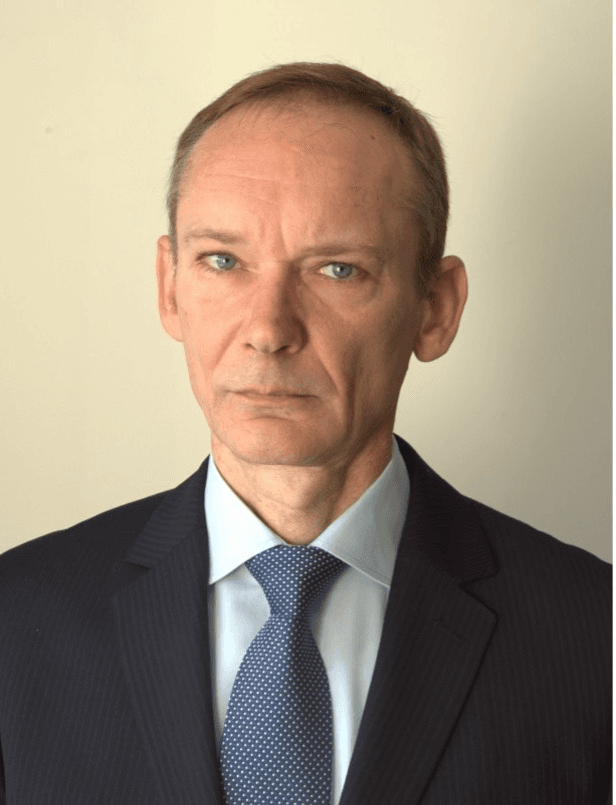
The Council brings together three member organisations that steward the four public-facing directions: Mihhail Frolov anchors the «Immortal Regiment»; Roman Firsov leads the «Necropolis» research project; RuCentre runs the auto-rally and cultural programmes. Flower-laying ceremonies are a community-wide tradition shared across all member organisations. Not as separate initiatives but as a coordinated structure, they together preserve and transmit the memory of the Victory generation.

Mihhail Frolov
«Immortal Regiment»
Stood at the origins of the movement in the UK; main administrator of the platform.

Roman Firsov
«Necropolis»
Historian; built the archive of Soviet military burials in the UK.

RuCentre
Auto-rally, concert, culture
Community centre uniting families around memory and culture.

«Immortal Regiment», main platform administrator
Mihhail Frolov stood at the origins of the «Immortal Regiment» movement in the United Kingdom. His contribution is not only organisational — it carries an ethical mission: to preserve respect for the people who lived through the war, and to keep specific names, faces and family stories from disappearing into abstraction.
For thousands of families, the war is a personal story. The «Immortal Regiment» returns the historical record to its human dimension — behind every portrait is not an abstract figure but a soldier, an officer, a nurse, a home-front worker, a child of war. To stand at the origins of such a movement means taking responsibility not only for organisation but for tone, meaning, and the dignified treatment of the subject — especially among compatriots living abroad, where trust and inter-generational understanding matter more than visibility.
Today Mihhail continues this work in modern form — as the main administrator of the «My Regiment» platform, where names, photographs, documents, memories and family testimonies can be gathered and passed on. The form has changed; the substance has not. Memory is sustained by those who give it their time, attention, and steady commitment.

Historian, archive lead researcher
Roman Firsov is a historian and independent researcher based in London. From 2016 to 2019 he led the «Necropolis» section of the «Russian Heritage in the UK» committee, compiling detailed records of Soviet servicemen and civilians buried in British cemeteries from ЦАМО, ГАРФ, CWGC and on-site documentation. The archive he built is the foundation of the historical documents section of moypolk.uk.
Detailed biography appears below on this page.

Auto-rally, concert and cultural programmes
RuCentre is one of the central public spaces of the Russian-speaking community in the United Kingdom, uniting compatriots around culture, historical memory, family values and public initiative. For many years the organisation has built an environment where the connection between generations is preserved, traditions are sustained, and a living community forms around shared history and responsibility for the future.
A central part of RuCentre's work is the annual Victory Day auto-rally — columns of cars setting out from London, Manchester, Birmingham, Liverpool, Sheffield, Leeds, Nottingham, Cardiff, Southampton and other cities, all converging on a common point. Each column has its name and its team; what binds them is shared respect for the past and the wish to keep memory alive. Each year the rally and the festival that follows draw more than a thousand people — families bringing their children, friends, relatives.
The festival closes the day with a concert, songs of war years, a field kitchen, a children's programme, a thematic exhibition and a fireside evening. RuCentre also runs cultural projects throughout the year — including a New Year theatrical tour for UK schools with its own actors and original productions. For moypolk.uk, partnership with RuCentre means working with people who have, year after year, built real public projects that bring families, cities and generations together around shared history, culture and human gratitude.
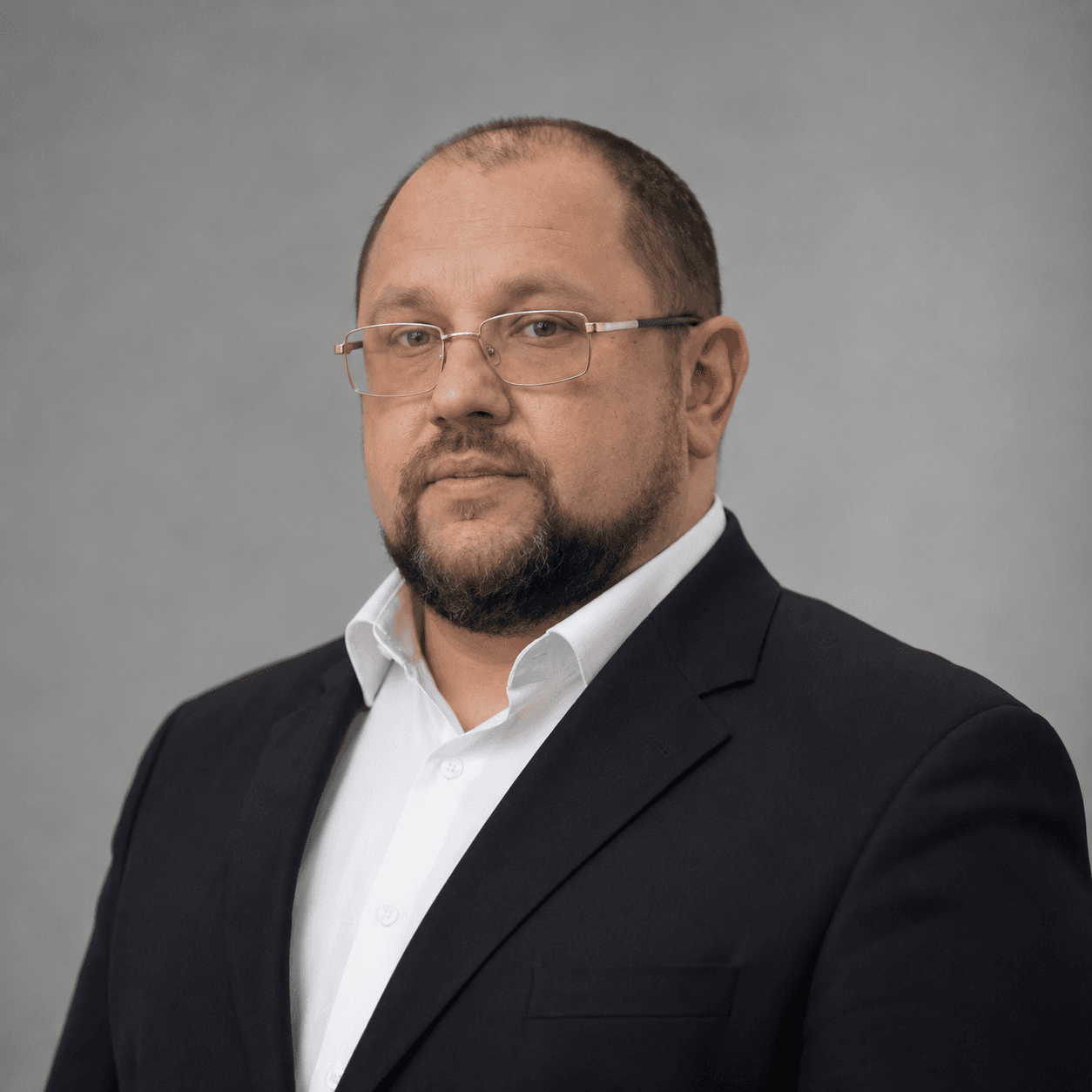
RuCentre representatives on the platform
Elena leads the regional coordinators pipeline. Open positions →
Through this structure the platform reaches into the regions, the schools and the cultural track — building a single system for preserving and transmitting memory.
Trust comes from discipline, not density.
Editorial work on the platform may be AI-assisted, but operational details — dates of events, names of partner organisations, attendance figures, quoted statements, milestone numbers — are not published without human verification and editorial approval.
The largest tank battle in history. Soviet forces decisively defeat the German offensive, gaining permanent strategic initiative.
The Western Allies open a second front in Europe, accelerating the defeat of Nazi Germany.
After 872 days, the longest and most destructive siege in history is finally broken.
Nazi Germany surrenders unconditionally. The war in Europe ends. Over 27 million Soviet citizens perished in the conflict.