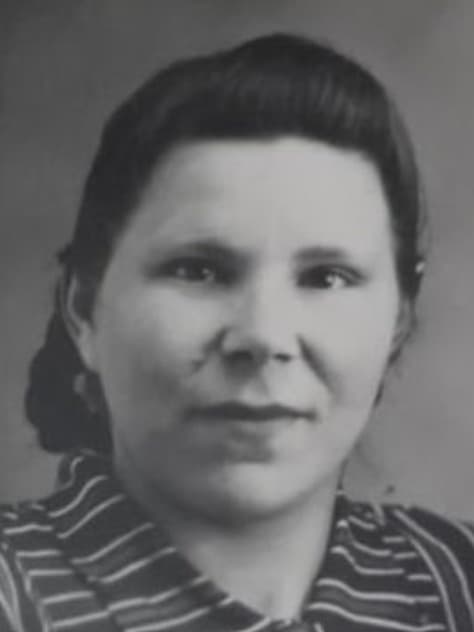
🕯️Virtual Candles
0 litNo candles yet. Be the first to light one.
Biography
Maria Vasil'evna: She Survived Execution by Firing Squad Three Times
Maria Vasil'evna was born on May 1, 1928, in the village of Taborishchi, in the Kirovograd Region of the Ukrainian SSR. She grew up in the family of Vasilyy and Alexandra alongside her older brother, Ivan, and her younger sister, Galina, who was still very small.
In the early days of the Great Patriotic War, Maria Vasil'evna’s father, Vasilyy, volunteered for the front. A new, arduous life began for the family, and soon the war reached Taborishchi itself.
In the autumn of 1941, the village was occupied by German troops. According to family recollections, local armed units and police forces appeared in the village alongside the occupiers, participating in the persecution of and reprisals against the local population. Arrests and executions of residents ensued.
Maria Vasil'evna was a staunch opponent of fascism and Nazism. She wanted to resist the occupiers, yet there were no organized partisan cells in the vicinity of the village that she could join.
Under these circumstances, resistance took a different form for her: the struggle for her own life and the lives of her family members.
According to family accounts, Maria Vasil'evna found herself three times among villagers being led to their execution. Each time, after the volley of gunfire, she would feign death. Once the executioners had left, Maria would get up and make her way home along back roads.
A lifelong wound served as a reminder of just how close she had come to death. She was missing the fingernail on the middle finger of her left hand—family lore held that it had been torn off by a bullet during one of the executions.
But her ordeals did not end there.
The occupying forces decided to deport some of the village residents to Germany for forced labor. Among those slated to leave their home were Maria Vasil'evna’s mother, Alexandra, her brother Ivan, and her infant sister, Galina.
Maria could not abandon them. Waiting for nightfall, she spirited her mother, brother, and baby sister away from the column. The family hid in a swamp not far from where the convoy was stationed.
However, a new problem arose. Due to hunger, Alexandra’s milk had dried up, leaving her with no way to feed the infant. Maria Vasil'evna took another risk: she returned to the convoy and stole a cow. According to family recollections, the theft went unnoticed, and the cow saved little Galina from starvation.
The fugitives remained in hiding until the convoy had left. Afterward, they were able to return to their home village.
In late 1943, Soviet forces launched an offensive along the Dnieper. During the combat operations of the 2nd Ukrainian Front, Taborishchi was liberated. However, the liberation of their home village was both a joyous and a tragic event for Maria Vasil'evna’s family.
Her father, Vasilyy, was killed during that operation while liberating his native land from the Nazi invaders.
Maria Vasil'evna survived the occupation, three near-executions, starvation, persecution, and the loss of her father. Her experiences did not remain merely a personal history; after the war, she passed on her memories to future generations, recounting what the Nazi occupation had brought and the ordeals the civilian population had endured.
Although she devoted her post-war life to peaceful labor, for Maria Vasil'evna, her family and the memory of what she had endured remained inseparable from the history of the Great Patriotic War.
Victory Day was the most important holiday for her. It was a day that signified not only the end of the war but also the victory over the forces that had once brought the conflict to her native village, claimed her father’s life, and jeopardized the lives of her entire family.
Maria Vasil'evna survived the war to go on living, working, raising a family, and passing on the memory of her experiences to her children and future generations. Her story is not merely one of wartime events, but the story of a civilian who had to fight for survival amidst the most harrowing circumstances.
Her memory remains a part of our family’s history.
Biography (Russian)
Мария Васильевна: трижды пережившая расстрел
Мария Васильевна родилась 1 мая 1928 года в селе Таборищи Кировоградской области Украинской ССР. Она росла в семье Василия и Александры вместе со старшим братом Иваном и младшей сестрой Галиной, которая была ещё совсем маленькой.
В первые дни Великой Отечественной войны отец Марии Васильевны, Василий, добровольцем ушёл на фронт. Для семьи началась новая, тяжёлая жизнь, а вскоре война пришла непосредственно в Таборищи.
Осенью 1941 года село было занято немецкими войсками. По семейным воспоминаниям, вместе с оккупантами в селе появились местные вооружённые формирования и полиция, принимавшие участие в преследовании и расправах над местным населением. Начались аресты и расстрелы жителей.
Мария Васильевна была убеждённой противницей фашизма и нацизма. Она хотела сопротивляться оккупантам, однако в окрестностях села не было организованных партизанских ячеек, к которым она могла бы присоединиться.
В этих условиях сопротивление для неё приняло другую форму — борьбу за собственную жизнь и жизнь своей семьи.
По семейным воспоминаниям, Мария Васильевна трижды оказывалась среди жителей села, которых вели на расстрел. Каждый раз после залпа она притворялась погибшей. Дождавшись, когда люди, проводившие расстрел, уходили, Мария поднималась и возвращалась домой окольными тропами.
О том, насколько близко она находилась к смерти, напоминала рана, оставшаяся на всю жизнь. На среднем пальце левой руки у неё не было ногтя — по семейным воспоминаниям, его оторвало пулей во время одного из расстрелов.
Но испытания на этом не закончились.
Оккупанты решили угнать часть жителей села в Германию для принудительного труда. Среди тех, кому предстояло покинуть родной край, оказались мать Марии Васильевны Александра, её брат Иван и грудная сестра Галина.
Мария не могла оставить их. Дождавшись ночи, она выкрала мать, брата и маленькую сестру из колонны. Семья спряталась в болоте неподалёку от места, где находился конвой.
Однако возникла новая проблема. Из-за голода у Александры пропало молоко, и кормить грудного ребёнка стало нечем. Тогда Мария Васильевна вновь пошла на риск. Она вернулась к конвою и выкрала корову. По семейным воспоминаниям, пропажу не заметили, а корова позволила спасти маленькую Галину от голода.
Беглецы оставались в укрытии до тех пор, пока конвой не ушёл. После этого они смогли вернуться в родное село.
В конце 1943 года началось наступление советских войск на Днепре. В ходе боевых действий 2-го Украинского фронта Таборищи были освобождены. Однако освобождение родного села стало для семьи Марии Васильевны одновременно и радостным, и трагическим событием.
Её отец, Василий, погиб во время этой операции, освобождая родную землю от немецко-фашистских захватчиков.
Мария Васильевна пережила оккупацию, три расстрела, голод, преследования и потерю отца. Пережитое не осталось только её личной историей. После войны она передавала свои воспоминания следующим поколениям, рассказывая о том, что принесла с собой нацистская оккупация и каким испытаниям подверглось мирное население.
Несмотря на то, что после войны её жизнь была посвящена мирному труду, семья и память о пережитом оставались для Марии Васильевны неразделимы с историей Великой Отечественной войны.
День Победы был для неё главным праздником. Это был день, который означал не только окончание войны, но и победу над теми силами, которые когда-то принесли войну в её родное село, отняли жизнь у её отца и поставили под угрозу жизнь всей её семьи.
Мария Васильевна пережила войну, чтобы продолжить жить, работать, создать семью и передать своим детям и последующим поколениям память о пережитом. Её история — это история не только военных событий, но и мирного человека, которому пришлось бороться за жизнь в самых страшных обстоятельствах.
Память о ней остаётся частью истории нашей семьи.
Awards & Decorations
- ★Medal "veteran of labour"
- ★Medal "for labour distinction"
- ★Medal "for labour heroism"
- ★Medal "100 years of V.I. Lenin"
Community Contributions
Share what you know
Do you know stories about this veteran?
Sign in to contributeComments
Sign in to leave a comment or tribute.
No comments yet. Be the first to share a memory.
Related Veterans
View all →
Manchester
Lastukhin Zakhar (Alexander) Kuzmich
1920 – 2005
Captain, Intelligence Officer
901 горно-вьючного артиллерийского Печенгского ордена А.Невского полка
Manchester
Shiryaev Fedor Gavrilovich
1888 – 1977
Home front workers
Krasnoyarsk Voroshilov Plant No. 4
Manchester
Gorkovenko Kirill Avramovich
1901 – 1992
Home Front Worker / Heel Worker
Shoe Factory No. 3 of the Mosgorkozhobuvprom Trust