Ivan Ivanovich Buyankov

Иван Иванович Буянков

1915 – 1995
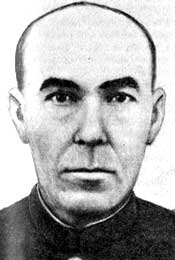
Ivan Ivanovich Buyankov

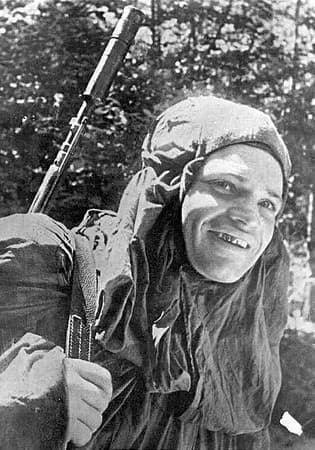
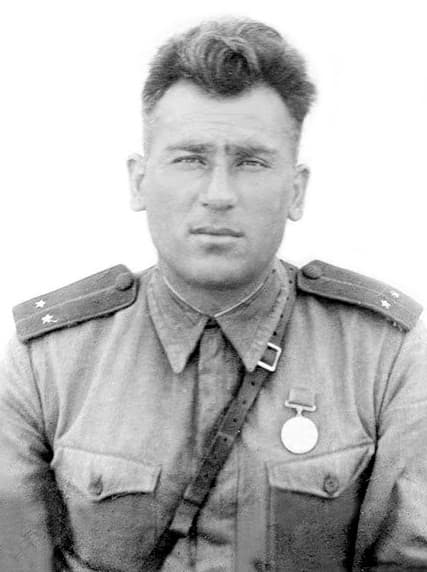
Ivan Ivanovich Buyankov, Hero of the Soviet Union. Photograph, before 1995. — Author unknown. Russian Wikipedia, File:Иван Иванович Буянков.jpg (source given there: warheroes.ru Hero_id=8920).

Virtual Candles

0 lit
Sign in to light a candle

Biography

Ivan Ivanovich Buyankov was born in the autumn of 1915 in the village of Khlestovo in Yaroslavl governorate, now in Lyubimsky district of Yaroslavl region, into a peasant family; the sources give his birth date as 25 October or as 2 October. From 1931 he taught in village schools of the district and was a school head, and in 1939 he graduated from the Danilov teachers' college. He was called up in September 1939 and served in the artillery; he joined the Party in 1940. In 1942 he graduated from the Gorky military-political school and became a battery political officer, and after accelerated officers' courses in 1943 he was given command of the 2nd Battalion of the 86th Rifle Regiment, 180th Rifle Division, 38th Army, Voronezh Front. He fought at Kursk, where he personally led a reconnaissance in force that took three prisoners, and in the liberation of left-bank Ukraine, where for the capture and holding of a fortified village in September 1943 he received the Order of Alexander Nevsky. On the night of 28–29 September 1943 Captain Buyankov's battalion was the first in the regiment to cross the Dnieper and then the river Starik near the village of Stari Petrivtsi in Vyshhorod district of Kyiv region. It dug in on the bridgehead, killed several dozen enemy soldiers and captured a quantity of equipment, and so made it possible for the rest of the regiment to cross. By decree of the Presidium of the Supreme Soviet of 29 October 1943, for courage and heroism in crossing the Dnieper and holding the bridgehead, he was made a Hero of the Soviet Union, with the Order of Lenin and Gold Star medal no. 2837. In later fighting in Ukraine he was seriously wounded in the right arm and after months in hospital at Orenburg did not return to the front. He went back to teaching, and in 1948 graduated from the Yaroslavl Pedagogical Institute. He worked in schools in the Lyubim district, in Rostov region and in Pavlodar region of Kazakhstan, retired on health grounds in 1966 and from 1970 lived in Yaroslavl. He died on 5 February 1995 and is buried on the Alley of Heroes of the Military Memorial Cemetery in Yaroslavl. He was also awarded the Order of the Patriotic War 1st class.

Awards & Decorations

  • Hero of the Soviet Union
  • Order of Lenin
  • Order of Alexander Nevsky
  • Order of the Patriotic War 1st Class

Community Contributions

Share what you know

If your family holds a photograph, a letter or a story, you can add it to this page. Everything you send is reviewed before it appears.

Same unit or organisation

Loading...

Comments

Sign in to leave a comment or tribute.

No comments yet. Be the first to share a memory.