Ismail Khalilovich Bayramov

Исмаил Халилович Байрамов

1900 – 1945
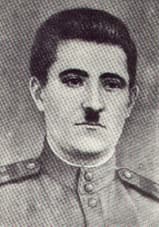
Ismail Khalilovich Bayramov

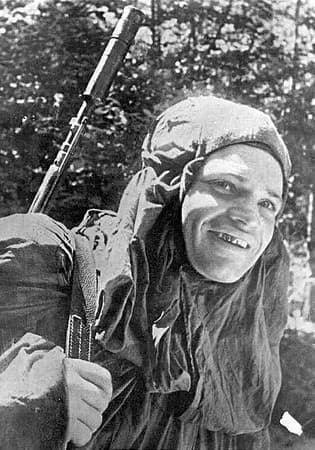
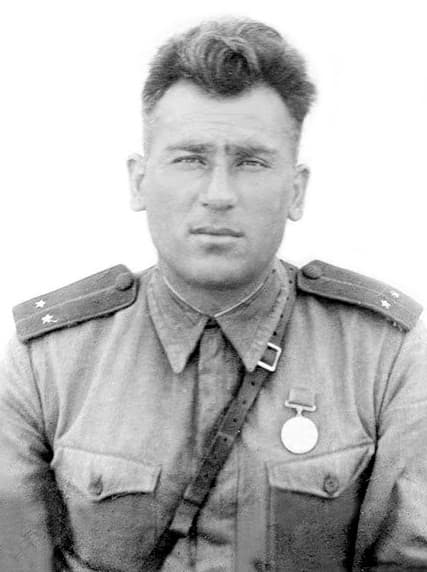
Ismail Khalilovich Bayramov — Source: warheroes.ru. Author unknown. Published under the project's permission from the Government of the Russian Federation.

Virtual Candles

0 lit
Sign in to light a candle

Biography

Ismail Khalilovich Bayramov was born in 1900 in the small town of Georgiyevsk in the Pyatigorsk division of Terek region, the son of a shepherd. He was Azerbaijani. He finished five years of junior secondary school in 1917 and helped his father with the flock. In 1918 hardship took the family to the Stavropol area, to the hamlet of Nariman, now part of the village of Dolinovka. He worked as a shepherd; when a collective farm was set up in the hamlet he became a tallyman and then a brigade leader. In 1939 he was elected chairman of the Third Five-Year Plan collective farm in Novoselitskoye district. He left for the front in 1944, at the age of forty-four, and joined the Communist Party in the same year. He served as the party organiser of a company of the 243rd Rifle Regiment, 181st Rifle Division. On 10 February 1945 his regiment was fighting for Neumarkt station, now the town of Sroda Slaska in Poland. Soviet units had not had time to consolidate on the station when German forces counter-attacked. The first two attacks were beaten off, after which the enemy withdrew and began mortaring the position. Going by sound and muzzle flashes, Bayramov and a party of men worked their way in darkness up to the mortars standing in the woods and destroyed them with grenades. In the third attack he took his men in with the bayonet and led the counter-attack: he killed more than ten enemy soldiers with his sub-machine gun and bayonet, then with two others silenced a heavy machine gun, opening the way for the battalion's rifle sub-units. Under his direction the men beat off two more attacks. From here the source contradicts itself, and the contradiction matters. One passage says that Bayramov, wounded twice and surrounded, blew himself up with a grenade together with the enemy soldiers around him rather than be taken prisoner. Another passage in the same text says that the severely wounded starshina was brought to the 110th medical battalion and died of his wounds the following day. The two accounts cannot both be true and neither is chosen here. The date of death is likewise given twice and differently: 10 February 1945 in the opening line, and the day after the fighting of 10 February in the body. By decree of the Presidium of the Supreme Soviet of 10 April 1945, Starshina Bayramov was posthumously made a Hero of the Soviet Union. He was awarded the Order of Lenin. He was buried in the military cemetery at the Elisenhof farmstead, now the eastern part of the village of Wilczkow in Malczyce commune, Sroda district, Lower Silesian Voivodeship, Poland. After the war the war graves at Wilczkow were moved to the military memorial at Sroda Slaska. A bust stands in his home village, and a street there carries his name.

Awards & Decorations

  • Hero of the Soviet Union (posthumous)
  • Order of Lenin (posthumous)

Community Contributions

Share what you know

If your family holds a photograph, a letter or a story, you can add it to this page. Everything you send is reviewed before it appears.

Same unit or organisation

Loading...

Comments

Sign in to leave a comment or tribute.

No comments yet. Be the first to share a memory.