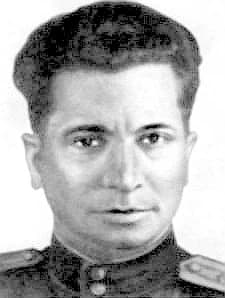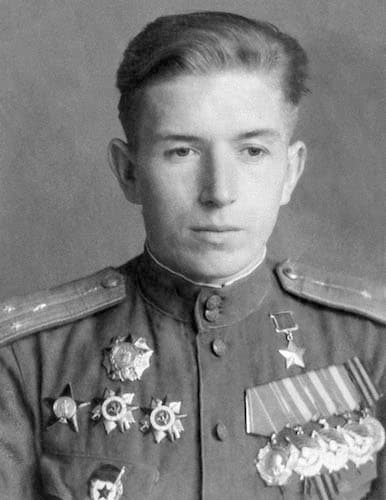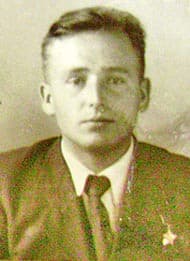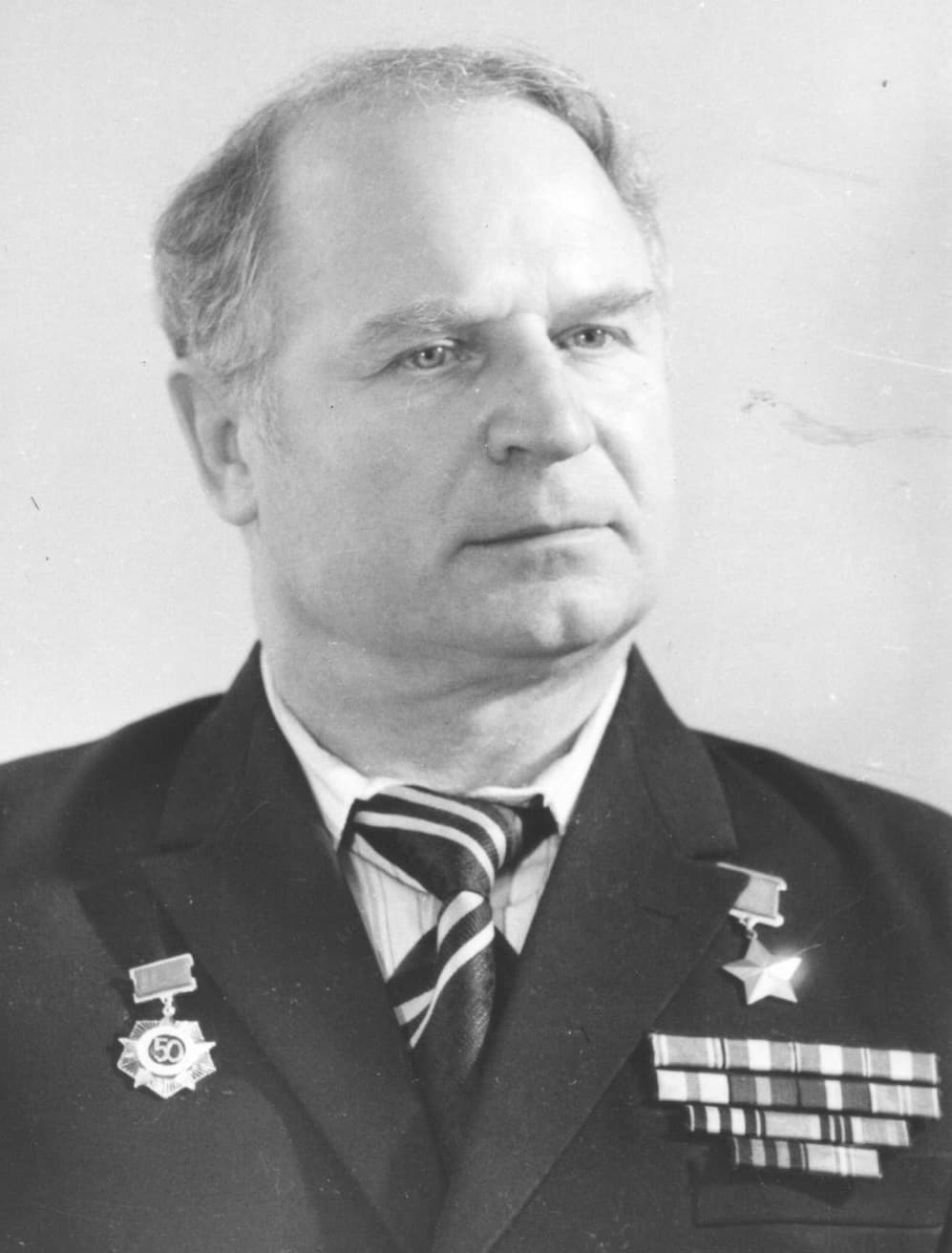
Georgy Timofeyevich Beregovoy

Георгий Тимофеевич Береговой

1921 – 1995
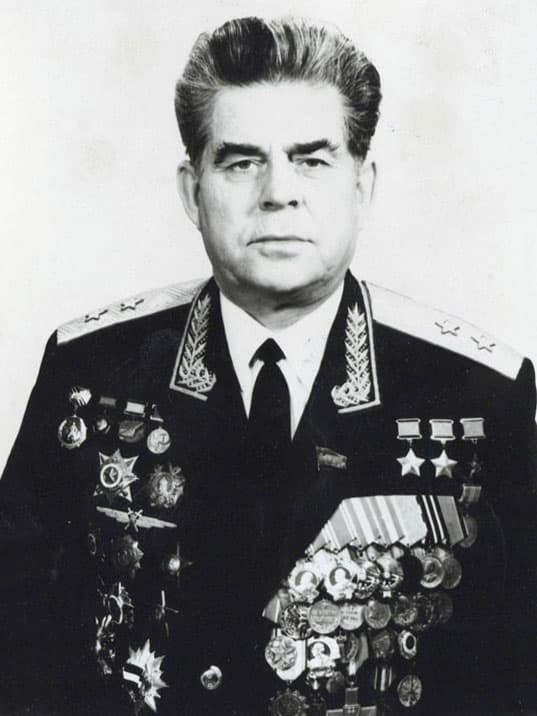
Georgy Timofeyevich Beregovoy

Georgy Timofeyevich Beregovoy — Source: Ministry of Defence of the USSR, via «Покорители космоса», 60cosmonauts.mil.ru. Licensed CC BY 4.0 (Mil.ru).

Virtual Candles

0 lit
Sign in to light a candle

Biography

Georgy Timofeyevich Beregovoy was born on 15 April 1921 in the village of Fyodorovka in Poltava province, now Karlivka district of Poltava region. The family soon moved to Yenakiyevo in the Donbass. He was Ukrainian; his father worked as a telegraphist on the South-Eastern Railway and his mother taught in schools and colleges. While at school in Yenakiyevo he was an instructor and then head of the aeromodelling section at the city children's technical station. After his eighth year he began work as an apprentice electrical fitter at the Yenakiyevo metallurgical works and trained at the flying club, graduating from it in 1938, the year he was called into the Red Army. In 1941 he completed the Voroshilovgrad military school for pilots. He reached the front in August 1942 as a flight commander in the 3rd Air Army on the Kalinin Front. In his memoirs he described what he found at the front airfield near Ostashkov: the 3rd Air Army was commanded by Mikhail Gromov, one of its corps by Nikolai Kamanin, and the division his regiment belonged to by Georgy Baidukov — three pilots who had been made Heroes of the Soviet Union in peacetime and whom he had taken as his models. Baidukov was the second pilot of the ANT-25 that flew with Chkalov and Belyakov; Belyakov is also in this archive. He served first in air reconnaissance and then moved to the Il-2 ground-attack aircraft. His wartime decorations are dated by order and tied to numbers of sorties: the Order of the Red Banner on 26 August 1942 for 15 combat sorties; a second Order of the Red Banner on 28 September 1943 for 18; the Order of Alexander Nevsky on 20 October 1943 for 21 sorties and for training his own pilots, who went on to fly 130; the Order of Bogdan Khmelnitsky 3rd Class on 11 April 1944 — he had been recommended for the Order of Kutuzov 3rd Class — for initiative, squadron command and 28 successful sorties; and the Order of the Patriotic War 1st Class on 14 January 1945 for 30 sorties and for directing his pilots skilfully by radio. From March 1943 he was deputy and from September commander of a squadron of the 671st Assault Aviation Regiment, which became the 90th Guards in May 1943, in the 4th Guards Assault Aviation Division, serving on the Voronezh and then the 1st and 2nd Ukrainian Fronts. Over the war Beregovoy flew 186 combat sorties on the Il-2 and was shot down three times. By decree of the Presidium of the Supreme Soviet of 26 October 1944, for heroism and courage in air combat and for 106 combat sorties, he was made a Hero of the Soviet Union. After the war he completed the Lipetsk higher officers' flying and tactics school, served in the Odessa Military District as a navigator and head of air gunnery, and in 1948 completed the test pilots' course. From 1948 to 1964 he was a test pilot and tested more than sixty types of aircraft, among them the MiG-15, MiG-19P, Yak-25, Yak-27K, Su-9 and Tu-128. He was the first to use the GSh-4 pressure helmet in practice. In 1949, testing the swept-wing MiG-15, he was the first to fly a jet in a spin and afterwards taught pilots to enter and recover from one. He graduated from the Air Force academy in 1956 and was made a Distinguished Test Pilot of the USSR in 1961. In 1963 he was selected for the cosmonaut corps. From 26 to 30 October 1968 he flew Soyuz-3; an attempt to dock with the unmanned Soyuz-2 in the Earth's shadow failed. The flight lasted 3 days, 22 hours, 50 minutes and 45 seconds. On 1 November 1968 he received a second Gold Star. He remains the only person whose first Star was for the Great Patriotic War and whose second was for a spaceflight. Flying at forty-seven, he was for several years the oldest person to have been in orbit, until Lev Dyomin passed him in 1974. On 22 January 1969, during the ceremonial reception of the cosmonauts at the Kremlin, an officer named Viktor Ilyin fired on the car in which Beregovoy was travelling, taking it for Leonid Brezhnev's; the source notes that a physical resemblance contributed to the mistake. The driver sitting beside Beregovoy was mortally wounded, and Beregovoy himself was slightly wounded by fragments of the windscreen. From 1972 to 1987 Beregovoy headed the Cosmonaut Training Centre. He took a doctorate and published scientific work on cosmonautics and engineering psychology. He retired in 1987 as a lieutenant general of aviation. He was a deputy of the eighth to tenth Supreme Soviets of the USSR and a laureate of the USSR State Prize in 1981, and was chief consultant on the films Moscow-Cassiopeia and Youths in the Universe. His brother Mikhail Timofeyevich Beregovoy (1918-2021) also served through the Great Patriotic War and headed the USSR's air defence radio-technical troops from 1968 to 1983. Another brother, Viktor Timofeyevich (1913-1938), an instructor at the Chelyabinsk flying club, was repressed and shot; he was posthumously rehabilitated in 1957. Beregovoy died on 30 June 1995 during heart surgery. He is buried at Novodevichy cemetery in Moscow.

Awards & Decorations

  • Hero of the Soviet Union (twice)
  • Order of the Red Banner (x2)
  • Order of Alexander Nevsky
  • Order of Bogdan Khmelnitsky 3rd Class
  • Order of the Patriotic War 1st Class

Community Contributions

Share what you know

If your family holds a photograph, a letter or a story, you can add it to this page. Everything you send is reviewed before it appears.

Same unit or organisation

Loading...

Comments

Sign in to leave a comment or tribute.

No comments yet. Be the first to share a memory.