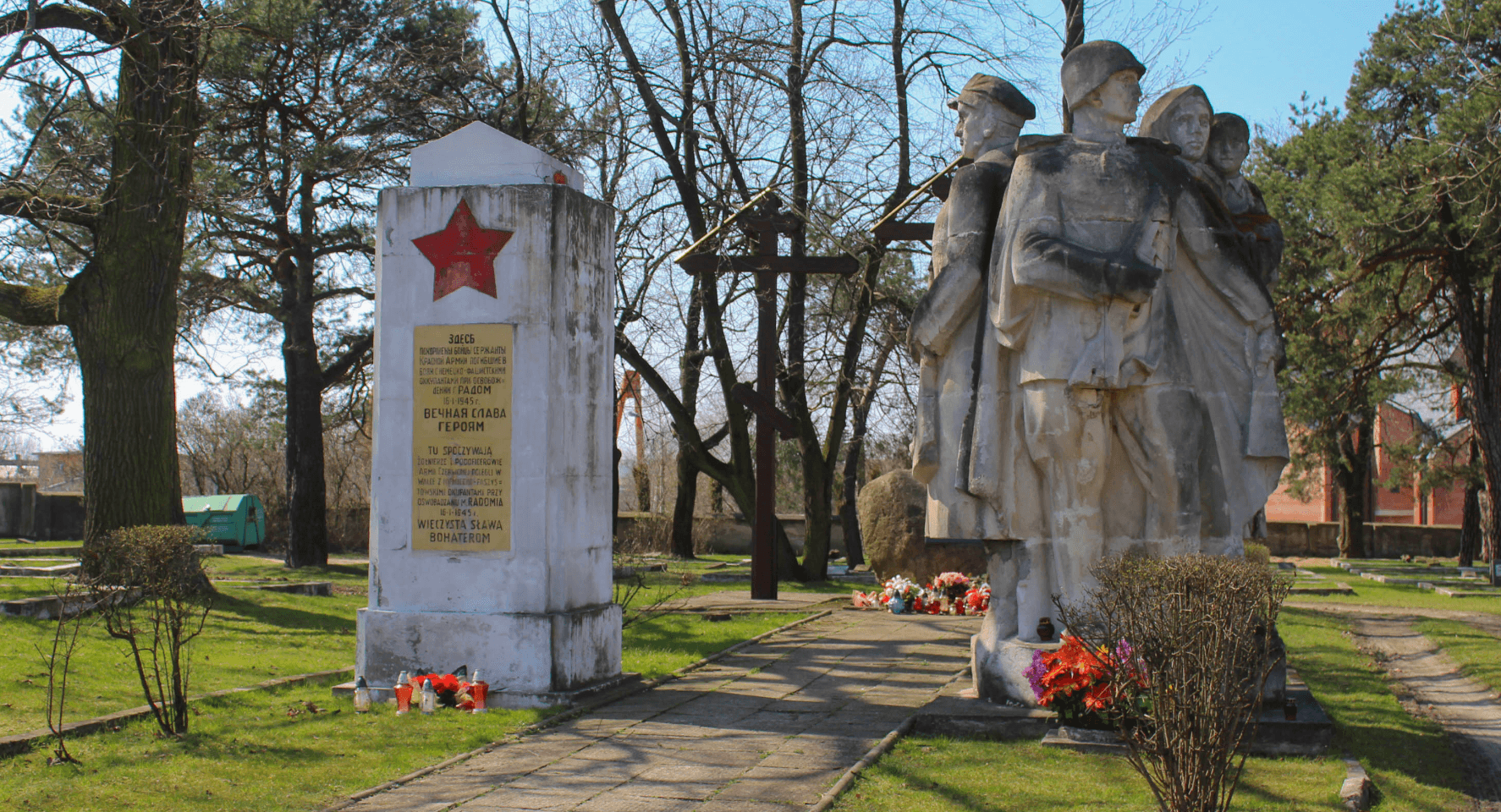
The Necropolis section documents 39 verified Soviet WWII burials across 10 English cemeteries, cross-referenced between Russian archives (TsAMO, GARF), CWGC, and the 2011 Military Attaché list. This guide walks through what the archive contains and how families and researchers can use it.
The Necropolis is one of the four directions of the My Regiment UK platform. It is a research archive — not a memorial page in the family-album sense — focused on Soviet citizens whose remains lie on British soil, and on the British, Russian, and emigrant historical lines that intersect in those burials.
This guide explains what the archive currently holds and how to engage with it: as a family searching for a relative, as a researcher contributing material, or as a reader trying to understand the layered history.
What the archive contains
The current research base covers 39 verified Soviet WWII burials, distributed across 10 cemeteries in England. The largest concentration is at Aldershot Military Cemetery; the rest are individual or small-cluster burials in smaller parish cemeteries.
Beyond military burials, the archive includes records of Soviet civilians who died on British soil during the war years. A separate research line tracks the Russian aviation necropolis in the UK — including figures from the first half of the 20th-century émigré military aviation, such as Prince K.A. Lobanov-Rostovsky (1887–1976). The Necropolis works at the meeting point of three histories: Soviet, émigré-Russian, and British.
Primary sources
Every burial record in the archive is built from cross-referenced sources:
- TsAMO (Russian Central Military Archive) and GARF (State Archive of the Russian Federation) — primary documents on Soviet military personnel and civilians who ended up in the UK.
- CWGC — Commonwealth War Graves Commission — official British records of foreign nationals buried during wartime; cross-checked against Russian sources for verification.
- 2011 Military Attaché list — a verified list of Soviet burials compiled by the Russian Military Attaché as of 1 January 2011, with dates of death, ranks, and years of birth.
- Field documentation — systematic photography of headstones, cemetery views, and TWGPP records confirming current condition.
No record enters the archive on a single source. The cross-reference is the methodology.
How to use the archive as a family
If you are looking for information about a Soviet relative who may have died in Britain during or after the war, the entry point is the Necropolis direction page. The cemetery list, the methodology, and the published documents are all there. The documents archive (linked from the page) carries the official lists and research papers.
If your relative does not appear in the published material, you can also write to the platform with what you know — names, dates of birth, military unit, last known location. Even partial information is useful for cross-referencing.
How to contribute research
The Necropolis section accepts new research material: archival documents, photographs of headstones, scans of letters or service records, regional cemetery records. If you have access to a parish cemetery in your area with what may be a Soviet wartime burial, the platform welcomes field photography and any local-archive context you can document.
What this work is not
The Necropolis is not a place to publish unverified claims. The archive''s standard — and the reason the work has institutional credibility — is that every entry is anchored in at least two independent sources. Submissions follow the same rule: if material cannot be cross-referenced, it stays in the research pipeline rather than going public.