From the ballpoint pen to jet engines — technologies born or accelerated during World War II went on to change the everyday lives of millions of people.
Many of the technologies we now take for granted appeared, or really took off, during World War II. Inventions created for military needs eventually changed everyday life for millions. This article looks at how events of the past shaped the modern world — and why it matters to remember not only the history of the war but also its scientific legacy.
1. Radar
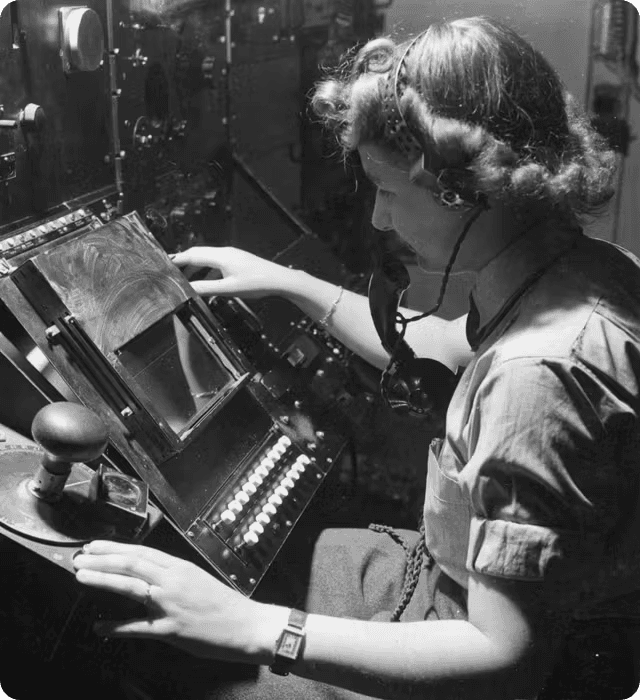
During the Battle of Britain, radar systems were actively used to detect incoming air raids. The technology was later adopted for civil aviation, navigation, meteorology, and even the road-speed cameras we use today.
2. The ballpoint pen
The ballpoint pen was invented in 1938 by journalist and artist László Bíró, who was frustrated by fountain pens that constantly leaked and stained the paper. The invention was patented the same year, and one of its earliest large customers was the British Royal Air Force — fountain pens leaked at altitude due to changes in pressure, while ballpoints proved far more reliable.
3. Jet engines
Jet engines were developed rapidly during World War II as a way to make military aircraft faster and more powerful. The German Messerschmitt Me 262 and the British Gloster Meteor were among the first operational jet aircraft. These developments became the foundation of modern civil aviation — fast long-distance flights as we know them today.
4. Xerography (photocopying)
The xerographic copying process was invented by American Chester Carlson back in 1938. The war years sharply increased the need for fast duplication of information, accelerating the technology's adoption. Carlson's idea became the foundation for modern copiers and printers — devices found in every office and school today.
5. Computers
The war years saw rapid development of early computing machines, used for code-breaking and complex calculations. Those machines became the foundation for modern computers, laptops, and tablets.
6. GPS and navigation systems
Armies needed more precise ways to navigate on land, at sea, and in the air. This is when radio-navigation technologies and early positioning systems really developed. These military developments later became the foundation for modern navigation and GPS.
7. Medical technologies
The war accelerated medicine: antibiotics came into wide use, surgical techniques improved, and blood transfusion systems were refined. The mass production of penicillin is a clear example. Although penicillin had been discovered by Alexander Fleming back in 1928, it was during the war (in the early 1940s) that technologies for large-scale production were developed. Many of those wartime medical advances are still used today.
8. Canned and frozen foods
The need to store food for armies over long periods drove the development of freezing and packaging technologies. Today those wartime techniques are part of how billions of people eat every day.
9. Adhesive tape
During World War II, adhesive tapes were widely used to repair equipment and seal packaging. They later became indispensable not only in the military, but in industry and everyday life.
10. Microwave technology
Research into radio waves and radar led to the development of microwave technology, which eventually made microwave ovens and modern communication systems possible.
Why this matters
World War II changed not only the course of world history but also gave a powerful push to science and technology. Many inventions made or refined in those years are still in everyday use and make life significantly easier. The aircraft, navigation systems, communications, medical equipment, and many other technologies we rely on today rest in part on ideas and research that began during the war.
But behind every achievement stand people — scientists, engineers, inventors, and researchers who continued to solve hard problems even in difficult times. Thanks to their work and their discoveries, the world gained technologies that are now hard to imagine living without.
By studying and remembering these stories, we don't only understand the connection between past and present — we also preserve the memory of the people whose ideas helped shape the future.