Viktor Vasilyevich Butylkin

Виктор Васильевич Бутылкин

1923 – 2002
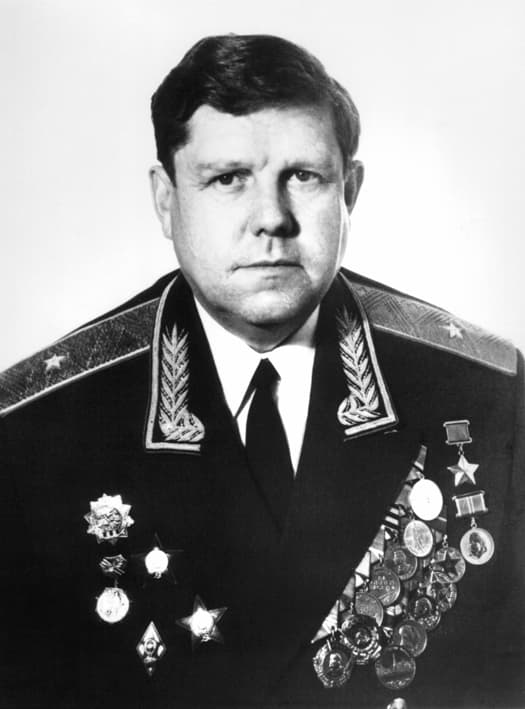
Viktor Vasilyevich Butylkin

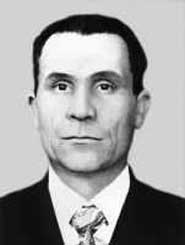
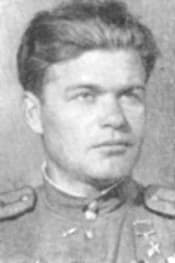
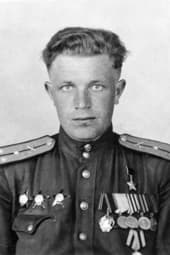
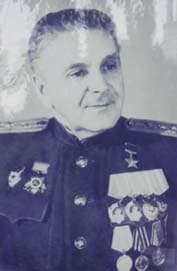
Viktor Butylkin, Hero of the Soviet Union, summer 1975. — Photographer unknown. Wikipedia file "Бутылкин, Виктор Васильевич.jpg" (ru.wikipedia local upload).

Virtual Candles

0 lit
Sign in to light a candle

Biography

Viktor Vasilyevich Butylkin was born on 27 October 1923 in Moscow. In 1938 he finished seven years of school in the settlement of Ashukino in Pushkinsky district of Moscow region, and in June 1941 the 5th Moscow Artillery Special School. He entered the army in June 1941 and in January 1942 graduated from the Ryazan Artillery School, then evacuated to Talgar in Kazakhstan. From April 1942 he was at the front as commander of a topographic survey platoon, chief of reconnaissance of an artillery battalion and then battery commander in the 118th Artillery Regiment of the 69th Rifle Division. He fought on the Western, Central and Belorussian Fronts — on the Yukhnov and Mtsensk axes, in the battle of Kursk and in the Chernigov–Pripyat operation — and joined the Communist Party in 1943. On the night of 15 October 1943 he crossed the Dnieper near the settlement of Radul in Repki district of Chernihiv region with Senior Sergeant Vasily Timonov and Corporal Ivan Kolodiy, carrying a radio set. Under fire their boat capsized; he helped the wounded men reach the right bank and recovered the sunken radio. From the bridgehead he directed his battery's fire in support of the forward detachment, which beat off repeated counter-attacks; when their position was discovered, the three men fought off the enemy themselves. On 20 October 1943 Butylkin was severely wounded. By decree of the Presidium of the Supreme Soviet of 30 October 1943 he was made a Hero of the Soviet Union with the Order of Lenin and the Gold Star medal, no. 2202. After hospital he served in a reserve artillery regiment, in May 1945 completed the Higher Officers' Artillery Staff School and until 1946 served in Germany. In 1952 he graduated from the Dzerzhinsky Artillery Academy and was posted to the first Soviet missile units at the Kapustin Yar range. From 1956 to 1985 he worked at Research Institute No. 4 of the Ministry of Defence, rising to head of a directorate, and from 1985 to 1987 headed a department at the Dzerzhinsky Academy. He became a doctor of military sciences in 1969, a professor in 1970 and a major general in 1984, and was the author of more than 120 scientific works. After retiring in 1987 he continued to work at the academy. He died in Moscow on 9 May 2002 and is buried in the Troyekurovskoye Cemetery.

Awards & Decorations

  • Hero of the Soviet Union
  • Order of Lenin

Community Contributions

Share what you know

If your family holds a photograph, a letter or a story, you can add it to this page. Everything you send is reviewed before it appears.

Same unit or organisation

Loading...

Comments

Sign in to leave a comment or tribute.

No comments yet. Be the first to share a memory.