Viktor Ilyich Baranov
Виктор Ильич Баранов
1906 – 1996
No portrait yet
Have a photograph? Share itVirtual Candles
0 litBiography
Viktor Ilyich Baranov was born on 4 January 1906 in Tula, the son of a shop manager at the Vorontsov samovar works. He finished three years of primary school in 1917, the first year of the higher primary school and then the Tula technical school, and worked at a Tula factory.
He volunteered for the Red Army in September 1923 and entered the 17th Tula infantry school, which moved to Vladikavkaz in 1924. As a cadet he took part in a troop operation to disarm armed formations in Chechnya in 1925, and in a similar operation near Khasavyurt in 1926. From October 1926 he served in the 64th Rifle Regiment of the 22nd Rifle Division as assistant platoon commander and platoon commander of the regimental school. From February 1932 he served in the first Soviet armoured formation, the Kalinovsky Independent Mechanised Brigade, as a platoon commander and then company commander in its machine-gun battalion. He completed the Moscow refresher course for motor-mechanised troop commanders in 1933 and from 1934 commanded a tank company in the 13th Mechanised Brigade.
From October 1936 to November 1937 he served in the war in Spain, and here the sources disagree: the literature says he commanded a tank company there, while by his own account he was a military adviser who took command of a Spanish tank battalion in action. Both statements are given as they stand. He was wounded and received the Order of the Red Star and the Order of the Red Banner.
On his return in April 1938 he was given command of the 31st Mechanised Brigade in the Leningrad Military District.
His Hero of the Soviet Union was conferred for the Soviet-Finnish war, not for the Great Patriotic War. In February 1940 the 13th Light Tank Brigade under his command, together with the 123rd Rifle Division, broke through the enemy defences near the village of Kamara, now Gavrilovo in Vyborg district, and in the capture of the heavily fortified village of Pienpero he showed, as the documents put it, organisational ability and courage. By decree of the Presidium of the Supreme Soviet of 21 March 1940, Colonel Viktor Ilyich Baranov was made a Hero of the Soviet Union with the Order of Lenin and Gold Star no. 134. That same month he was promoted brigade commander, and on 4 June 1940 major general of tank troops.
He is in this archive as a participant in the Great Patriotic War, which is a separate fact about him rather than the basis of his title. From June 1940 he commanded the 1st Tank Division and held that command on 22 June 1941. The division served with the 14th Army of the Northern Front, holding positions at Alakurtti and west of Kandalaksha, and was then moved urgently to the Leningrad sector, where from early July it fought in the Leningrad defensive operation. In the fighting for Krasnogvardeysk, now Gatchina, the 3rd tank company of Zinovy Kolobanov, from the 1st tank battalion, knocked out 43 German tanks in all on 20 August 1941 — that is the company's achievement, not the divisional commander's, and it appears here as an event of his formation.
By early September 1941 the division was split between Pushkin and Oranienbaum; at the end of September it was disbanded and the 123rd Tank Brigade was formed from its units with Baranov in command. With the 54th Army the brigade took part in the unsuccessful Sinyavino operation of October 1941 and suffered heavy losses.
From April 1942 he was deputy commander of the 54th Army for armoured troops, and from June 1942 until the end of the war commanded the armoured and mechanised forces of the Leningrad Front. He took part in the defence of Leningrad, in Operation Iskra and in the Leningrad-Novgorod, Vyborg-Petrozavodsk and Baltic operations, and in containing the German force in Courland. He was promoted lieutenant general of tank troops on 15 December 1943.
He was recalled from the front to study in April 1945 and graduated from the Voroshilov higher military academy in 1946. He commanded the armoured and mechanised forces of the Leningrad and then the Far Eastern military districts, and from August 1953 those of the 15th Army on Sakhalin and the Kurils. From February 1955 he was senior military adviser to the commander of the armoured forces of the Czechoslovak People's Army, and from January 1957 to December 1960 inspector general for armoured and mechanised forces on the staff of the Warsaw Treaty joint forces. He went into the reserve in February 1961.
He lived in Moscow and died on 26 October 1996, buried at Golovinskoye cemetery. He wrote a memoir of the fighting in Finland (1941) and the essay "Armour and Men" in the collection Tank Crews in the Battle for Leningrad (1987).
Awards & Decorations
- Hero of the Soviet Union
- Order of Lenin (x2)
- Order of the Red Banner (x5)
- Order of Kutuzov 1st Class
- Order of the Patriotic War 1st Class (x2)
- Order of the Red Star
Community Contributions
Share what you know
If your family holds a photograph, a letter or a story, you can add it to this page. Everything you send is reviewed before it appears.
Same unit or organisation
Loading...
Comments
Sign in to leave a comment or tribute.
No comments yet. Be the first to share a memory.
Related Veterans
View all →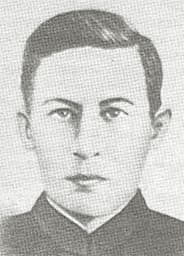
Bukhtuyev Mikhail Artemyevich
1925 – 1944
Guards Sergeant
15th Guards Tank Brigade, 1st Guards Tank Corps, 65th Army, 1st Belorussian Front
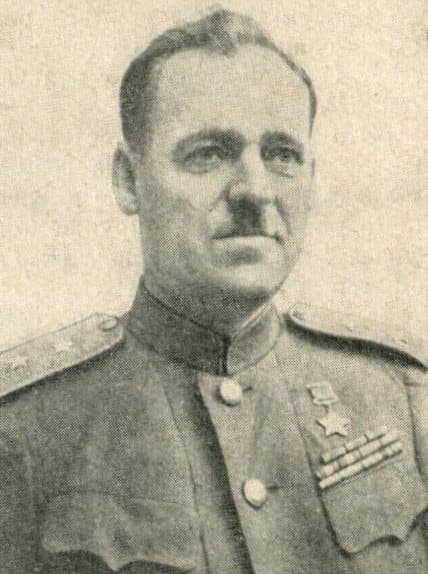
Butkov Vasily Vasilyevich
1901 – 1981
Lieutenant General of Tank Troops
1st Tank Corps (from 1945 1st Insterburg Red Banner Tank Corps), 3rd Belorussian Front
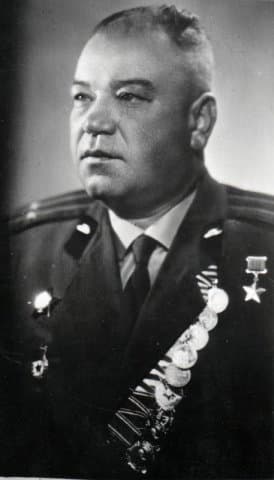
Bushilov Mikhail Ivanovich
1924 – 1974
Guards Starshina
67th Guards Tank Regiment, 19th Guards Mechanised Brigade, 8th Guards Mechanised Corps, 1st Guards Tank Army, 1st Ukrainian Front
Butyakov Sergei Nikolayevich
1916 – 1940
Junior Lieutenant
398th Tank Battalion, 50th Rifle Division, 13th Army, North-Western Front